
The Poet Lends a Hand

“Of the Terrible Doubt of Appearances”— this title, of one of Walt Whitman’s poems, jumped out at me when I opened Garrison Keillor’s The Writer’s Almanac recently. Somehow, for all of my admiration of Whitman, I had never noticed this poem before. Here it is. I wonder if you’ll react to it as I did.
Mary, Mary, Quite Contemporary

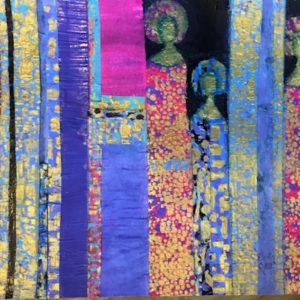
“What might Mary as a contemporary of ours in the 21st Century look like? It is that question that the artworks in this exhibition are intended to answer. The objective? To prompt a different way of thinking about, perceiving, and seeing Mary,…and reflecting on what she might mean to us in our society today so that we might connect to her in a more intimate way.” (Curator’s Statement)

My Mother is Mortal

“What if you knew you’d be the last / to touch someone,” asks Ellen Bass in her poem “If You Knew.” Did my anticipation of my father’s death change the way I behaved with him while he was still alive? I don’t know. Might it change my attitude toward and treatment of others, including annoying others, if I remembered, in every encounter, that they’re going to die?

Distractions Are the Way to God

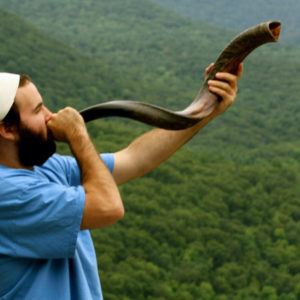
I, too, have a shofar, a ram’s horn, that I cannot sound. Well, sometimes I can get one rather tortured tekiah (one of four traditional sounds) out of it, but don’t choose me to blow shofar on demand as part of Rosh Hashanah and Yom Kippur services.

What Dante Means to Me

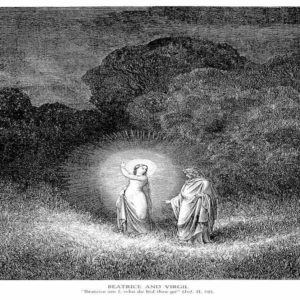
In recent years Dante’s Comedy has been important to my thinking about high fantasy. That phrase, as far as I’m aware, appears for the first time in Western literature in the middle of the Purgatorio and at the very end of the Paradiso. L’alta fantasia. It was a turning point in the history of the idea of fantasy, because now fantasy could be high—that is, heaven-sent, theophany.

Amazing Grease

It’s possible to read Rae Armantrout’s short poem ‘The Way’ as a kind of mock confessional epiphany poem that winds up with an actual (if ironized, meta-poetic) “epiphany” in which a postmodern artist estranged from the language-game of church-life finds a way to “be herself,” to be a poet, precisely by the kind of humorous, disjunctive play in the field of religious language that the poem itself performs.

St. Bernard’s Smile

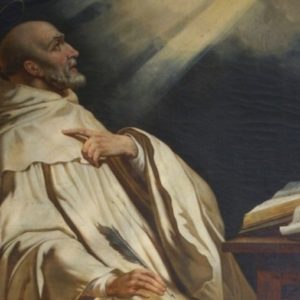
Fr. Slater’s book on Bernard of Clairvaux is precious to me not simply as a good friend’s fine accomplishment. It is, for me, preciously timely. That’s because I had just been puzzling once again why it is that Bernard plays such a climactic role in the unfolding of Dante’s The Divine Comedy.

The Lilies Break Open Over the Dark Water

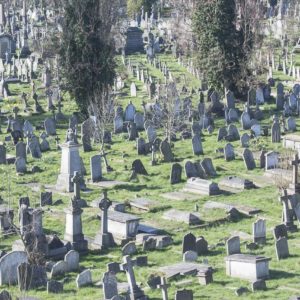
The gravedigger catches my eyes: his grizzled gray stubble and worn cap, the curly hank of yellow-gray hair riding his neck. Even in his mechanic’s fatigues, he looks like a monk I know— with the same hair and glasses, the same lean jaw. “I went from sex, drugs, and rock ‘n roll to chastity, poverty, and obedience,” the monk likes to quip.

Finding My Way to the Mourner’s Kaddish

On the drive back from New Jersey to North Carolina two days after my father’s passing, I remember: Leon Wieseltier’s Kaddish. I’ve owned it for twenty years. It’s one of those books that, when I purchased it, I felt I needed to read. I was the director of a small Center for Jewish Studies. And I was a poet, a Jewish poet. I needed the knowledge.

The Tutelar of Place and the Turn of a Civilization

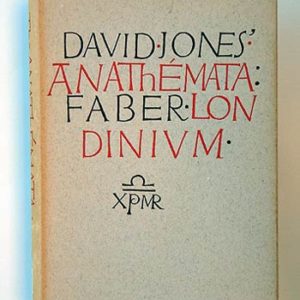
I’ve begun re-reading the work of David Jones, the Anglo-Welsh poet and artist and champion of the sacred and the crafted (what he called the extra-utile). Jones was a proponent of sacramental poetics, among the few really able to behold art as efficacious sign—the symbol that is also what it symbolizes, or a window upon that other world that art allows to show forth.

A Homegrown Banquet

In a year when overdue attention has at last fallen on the dark legacy of Canadian residential schools for indigenous children and, to a lesser extent, the equally disturbing history of off-reservation boarding schools in the United States, there’s another, far happier moment for Native nations that should not pass unnoticed: 2021 has been a good year for Native writers.

Roses, Bees, Sages, & Strangers: Q&A with Karen An-hwei Lee

The four parts of my book echo the progression of Virgil’s The Georgics: Book I—agrarian labor like tilling the soil, weather signs and war omens; Book II on olive groves vs. vineyards (“The Vituperation of the Vines”), birth of trees; Book III on animal husbandry (veterinary care, procreation), cycles of life in nature; and finally, Book IV, a “bio-mythography” of bees. I also explore Virgil’s questions in The Georgics: What is the ultimate path to happiness? What is pleasure? What is a good life?

Gitanjali

I read Gitanjali again in a Mount Desert Island cottage on a chilly June day, nursing a summer cold but keeping the window open to the sea air and the sound of the water. I am a mother to another woman’s orphans now, I am a wife to their father. I can hear the children on the lawn and discern their voices one-by-one, unseen but mapped on the green as they play.

How It Ends

I’m sixty-seven. I was twenty-eight when I heard Stephen Dunn read “Men at 40” by Donald Justice in a gymnasium at New Jersey’s Artist Teachers Institute. A year later I would be Justice’s student. But for now I was Stephen’s, all Stephen’s.

Song of the Open Road

For this post, I want to hang out with “Song of the Open Road.” I wonder why. I think because I’m moved by its all-embracing spirit, and I like where the poem takes me. Or maybe because, with COVID keeping me cooped up at home for so long, I need some expansiveness. And I need a celebration of the fresh air that I can finally breathe.

Mountains and Muses: Q&A with Paul J. Willis

It confuses me that nature writing should be considered as some sort of specialized niche. The earth is really our grand subject. But, like Wordsworth, I seem to be as interested in the quirky people I run across as I am in the natural places in which I find them.

Poetic Wholeness

The triadic relationship between poet, poem, and muse comes without guarantee. A passing observation or merest whisper of a phrase can lead to a successful end, while an idea that seems to emerge like Athena from Zeus’s forehead may soon wither and die. Most poets take each inspiration as it comes, following the scent of what’s given in search of a surprising and fitting wholeness.

The Dead Don’t Get Around Much Anymore

I have no idea what poetry means to my father. In their modest apartment, he and my mother have a little shelf where they keep copies of my books. Along with my books, they have copies of Stephen Dunn’s Local Time and Donald Justice’s Selected Poems. Stephen and Don were my teachers. I don’t know if either of my parents have read any of their poems.

Wallace Stevens in Vietnam

That is the connection between Stevens and Nguyen. Nothing. Both writers are geniuses at revealing the revolutionary power of Nothing, Stevens for the literary, Nguyen for the political imagination. Nothing like nothing releases both imaginations from the dead end of habit and convention.

Let Me Not to the Marriage of True Minds…

George and I met in English lit. grad school over a half-century ago. Those were (literally) heady days: our laughing conversation was a back-and-forth ping pong with each other’s metaphors; our first argument was over symbolism in Moby Dick. So when we married about a year later, it truly was (to borrow Shakespeare’s phrase) a “marriage of true minds.”