
Read an Excerpt from Miller Cane
Professional liar Miller Cane is making a killing traveling around the country running therapy groups for survivors of mass shootings—and business is booming.

Professional liar Miller Cane is making a killing traveling around the country running therapy groups for survivors of mass shootings—and business is booming.

What makes words arranged on a page serve as a poem? Over the centuries, poets and critics have spoken of poetry as prospective (as opposed to retrospective), as generating openness, suggestiveness, connotative implication, ambiguity, and—as poet Scott Cairns has said—recognizing the poem as a scene of meaning-making, rather than merely a document of meaning made.

In this, his tenth and perhaps final book of poems, Paul Mariani—acclaimed poet, biographer, critic and teacher—reflects on his life, returning in memory to the 1940s and ending some eighty-five years later with the present. No wonder, then, that so many of the poems strike an elegiac note, some with humor, some with sadness, some with wonder, some with regret—and all asking questions for which there are at best only further questions.

A year has passed since Halley’s mom died, but she still feels like she’s falling to pieces. Dad talks her into joining him at her uncle Gill’s house for yet another homemade science experiment (something to do with black holes and cosmic rays), but to their horror, his machine explodes in a flash of blue light.

W.H. Auden said about poetry: “there is only one thing / that all poetry must do; it must praise all it can for being / and for happening.” For forty years, Robert Cording’s poems have sought to praise a world that need not be, but is. His poems embrace what cannot be changed: that living brings us face-to-face with suffering and injustice, beauty and grace.

Tom Howard’s award-winning debut short story collection, Fierce Pretty Things, won accolades for blending “raw emotion with surreal forays into the supernatural and metaphysical.”

John Poch’s eighth collection, The Future of Love, is comprised of poems written over the past twenty years, rooted in and inspired by the landscape of Spain, Federico García Lorca’s surrealism, and Pablo Neruda’s eros.

The capstone of a distinguished literary career, James Baldwin Smoking a Cigarette and Other Poems is Baron Wormser’s eleventh book of poetry. It speaks to matters that have haunted and obsessed the author for a lifetime—especially the ways that a finite poem can intersect with the infinitude of being.

When thirty years of untreated bipolar disorder left his father fighting for his life, Howard Schaap began to wonder how this man had fallen so far—from Minnesota’s Young Farmer of the Year to financial failure in the farm crisis to a bed in the neurology wing of Mayo Clinic. Brooding Upon the Waters is Howard Schaap’s memoir—at once deeply compassionate and searingly honest—of his father’s anguished journey.

“Do not hurry your journey,” the poet says midway through this stunning collection. “Better if it lasts for years, so you arrive / laden with all you’ve lost along the way.” Bonnie Naradzay’s journey—as mother, professional, teacher, and longtime volunteer, leading poetry sessions in prisons, a retirement community, and among the homeless—has gathered much of both the lost and found, culminating in the publication of Invited to the Feast, a collection of poems and literary debut coming in her eightieth year.

In the early years of the eighteenth century, the settlers living in the hamlet of Hartfield Falls in “English America” face the looming threat posed by historical and political forces beyond their control.

In the final, absorbing volume of his Three Paintings Trilogy, philosopher and critic Morgan Meis explores the art of Joan Mitchell and in particular one of her crowning achievements, the Grand Valley series.

We are delighted to announce that Emily Kwilinski, Ph.D. is joining our team as Slant’s Managing Editor. Emily comes to us with a wide array of skills and experiences perfectly suited to expanding Slant’s readership and further establishing its presence as one of the most distinguished independent literary presses in North America today.

In his eighteenth collection of poetry, Eric Pankey continues his forty-year investigation into how and what one can know in this world and beyond it. The poet, Jane Hirshfield, says about his poetry, “Eric Pankey is a poet of precise observation and startling particularities.”

Written during the first three “Covid Years,” For Now, We Have Been Spared is a collection of complex sequences and carefully constructed shorter poems that reflect the uncertainty of living through a pandemic—not only in terms of the immediate threats to the body, but also the tectonic shifts in how we perceive the nature of existence itself.

When he was a young seminarian, the teacher in Luigi Giussani’s singing class played a recording of an aria from a Donizetti opera, “Spirto gentil” (“Gentle spirit, you once shone in my dreams, but after, I lost you forever. . .”). At that moment, Giussani “understood for the first time that God existed, and thus that nothing could exist without a meaning; that the heart could not exist unless the heart’s goal existed: happiness.”

What do we mean when we say “I”? Behind that word there exists today a deep and abiding confusion. And yet what could be more urgent for each and every one of us than an understanding of what it means to be a subject—a true protagonist in the world? Nothing is as fascinating as the discovery of the true dimensions of one’s own “I.”

In Your Names Are Written in Heaven, veteran Italian journalist Davide Perillo tells the inspiring story of Rose Busingye and “her women” with clarity, compassion, and insight.

According to T.R. Hummer, “Stephen Haven is a poet of incisive discipline deployed in the service of a passionate, humanistic ethos.” His poems reflect “concern for humanity, and concern for language, humanity’s best hope.” The poems in Haven’s new collection, The Flight from Meaning, have been shaped by—and serve as responses to—an American predilection for violence, spectacle, and distraction—the ways they flatten and diminish our experience of the world.
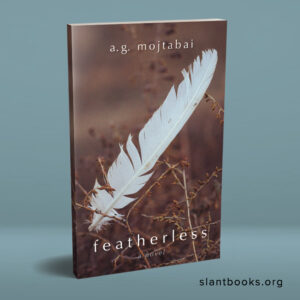
Plato famously defined a human being as a “featherless biped.” It’s hard not to sense the ironic humor in this definition, a reminder that, for all our talk about human dignity, our condition is contingent, vulnerable, and at some level even comic. Perhaps that’s why the writer A.G. Mojtabai—known for her dry, understated, subtly humorous but ultimately honest and courageous depictions of the human condition—chose the name for her latest novel, set in the confines of Shady Rest Home for the Aged.