Emerson’s “The Poet”

If I handed you an essay called “The Poet,” you’d likely expect an analysis of, say, the poet’s meter or imagery and symbolism. But if the essay is Ralph Waldo Emerson’s “The Poet,” you won’t find any of this. Rather, you’ll read that “it is not meters but meter-making argument that makes a poem.” And “Things admit of being used as symbols because nature is a symbol.”

How I Became a Fan of Jia Tolentino

Virginity is on trial here, and virginity’s crime is…? Tolentino summarizes one writer’s terms for it: “that celibacy had lately doubled among people in their early twenties.” As if virginity is metastasizing like cancer or multiplying like rabbits. Then Tolentino quotes another writer who gives the offense an economic spin by calling it a “sex recession,” as if virginity were the fall-out from bad investments.

My Mistake: An Example from Emerson

There’s a mistake I sometimes make in my close reading of literature. In the classroom work I’m doing, or in the essay I’m writing, I tend to interpret the words, lines, and sentences at the beginning and the middle from the vantage point of the end. I know where the poem or piece of prose has concluded, and I project what I have come to know into what I had earlier read.

Knitting Yarns: Writers on Knitting

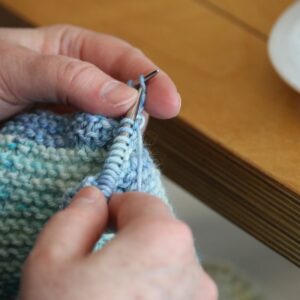
Among my favorite activities are writing, reading, and knitting. So when my sister told me about an essay collection with the aptly punned title, Knitting Yarns: Writers on Knitting, I of course bought it immediately. Here were three of my top pastimes all together: I could read what well-known writers wrote about their knitting experiences.

Essaying

“Here’s the very essence of what an essay is. If it knew where it was headed, it would be a report, not an essay; if it had already concluded its argument, it would be an article, not an essay; if it had something to teach or censure, it might be a critique, or an opinion, but not an essay.”