Am I a Grasshopper?

The Jewish poet Hayim Nahman Bialik calls upon his bird to “Sing and tell me, my little bird, / of marvels in distant places.” It’s a bit hard for me to envision the “marvels” of Israel at the moment. Like many Jewish people, I’m distraught about Israel right now. In “To the Bird,” Bialik imagines an idealized place. It’s a “land of the sun,” a place “of wonders from where / spring springs eternal,” a “land where almonds and date palms bud.”

Angelus Novus

In 1920, the Swiss artist and all around maniac of wandering lines, Paul Klee, painted a work that came to be known as the Angelus Novus. I’ll tell you a somewhat shameful story about the history of this painting and the history of me. I learned about the painting by reading Walter Benjamin, as have many. The Angelus Novus appears and plays an important role in Benjamin’s Theses on the Philosophy of History.

Abba Warren: Give Us a Word

In the days since Warren Farha passed away, suddenly, at the age of 70—a man I knew and loved for nearly 35 years—the overwhelming sense-impression that floods my memory is the way he used to hug me.

Close Reading King David and the Prophet Nathan

Today we’re more Emersonian than ever. We maintain that everyone is unique, that the primary task of life is to discover and give expression to the singular self each of us is meant to become. But can we define and understand ourselves in isolation, illuminated as though we existed alone? We’re social from the beginning, in networks of relationships, dependencies, affections, and obligations.

How to Live with This

Fortunately, after a few weeks the acute pain began to subside. Now I am returning to another obstacle, deceptively comforting, that gets in the way of my perceiving and experiencing the Divine in the work of Her creation: familiarity. Leah Goldberg’s prayer-poem, translated from Hebrew by Annie Kantar, reminds me that I am not alone in living with a dulled awareness of the amazing gift of life itself.

Robert Cording’s Poetry of Grief

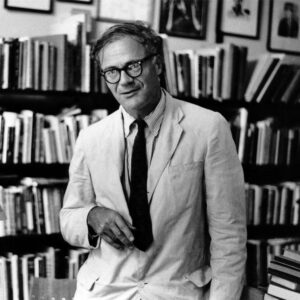
I’m reading Robert Cording’s latest poetry collection, What’s Possible: New & Selected Poems. In the “Selected Poems” sections, we get a survey of Cording’s long, celebrated poetic career, ranging from Life-List in 1987 through Without My Asking in 2019. Cording actually published a subsequent book that he doesn’t include selections from: In the Unwalled City (2022). The reason for this omission is that the section of “New” poems in What’s Possible continues the theme of the 2022 collection: Cording’s grief over the recent death of his thirty-one-year-old son, Daniel.

Of Memory and Silence: Q&A with Robert Cording

I’ve always felt my work centered on the inextricable nature of joy and sorrow.  I’d say the selection of poems drew on three aspects: that for me the ordinary world is extraordinary; that what’s extraordinary is we live in a creation that need not be, but is; and that our work is, as Gary Snyder has said, to make the real world as real as possible.  To me that involves my attempts, however often I’ve failed, to see the world and not my “idea” of the world, as Wallace Stevens put it.  I have always felt the unearthly earthliness of the world I live in and I hope the poems I’ve chosen reflect that in myriad ways.

Puzzling with Paul Gauguin

Paul Gauguin’s first major Tahitian canvas, “Ia Orana Maria” (“Hail Mary”) is a painting that should be seen at the Met, if you can get there. My wife Peggy and I can’t. But we visited the painting anyway, not once but twice, in the form of a thousand-piece jigsaw puzzle featuring “Ia Orana Maria.” We painstakingly put it together, took it apart, and just now, a year or so later, put it together again.

“The Laughter of the Father”: J.C. Scharl’s New Verse Play

In The Death of Rabelais, her recent verse play, J.C. Scharl has created something rare: an excellent comedy about death. It is, moreover, not only a comedy about death, but a comedy about comedy’s relationship with it. But the most impressive thing is that the play manages to take death seriously and, at the same time, be very funny.

The Healing Eloquence of Space

Yes, I know: a flat-out contradiction. How can space be eloquent? or speak at all? Space is a nothing, isn’t it? An absence. A way of indicating a separation. The words around it speak, not the space itself. But if you think that way, you’ll find yourself challenged to think otherwise by the recently published This and That: Short Poems of Zen Master Ryokan, translated by Stan Ziobro and John Slater.

Archeologists of Memory: Edmund de Waal and W.G. Sebald

The work of both W. G. Sebald and Edmund de Waal is the result of a never-ending curiosity, steeped in years of craft, whether (for de Waal) at the potter’s wheel making porcelain vessels, or (for Sebald) pen to paper endlessly revising paragraphs. Both strike a similar chord; one of tenderness, of loss, estrangement and displacement.

The Isle of the Dead

I’ve never actually seen Arnold Böcklin’s famous but now not really all that famous, let’s say once-famous and now fairly obscure painting known as Die Toteninsel, or The Isle of the Dead. I haven’t seen it in person. There is a version of the painting, I guess Böcklin painted a number of versions of the painting since they kept getting destroyed by wars and other annoying events, but there is a version of the painting at the art museum in Leipzig and I kick myself that I was in Leipzig not that long ago, a couple of years ago and completely and utterly failed to go see the painting.

Suburban Noir: Q&A with Tom Howard

I find myself writing a lot about the feeling of things coming an end, and so the worlds in the stories inevitably share some characteristics. Things are always breaking down, or are right at the point of breaking down. I don’t try to link the stories or sketch out all the rules, so there’s not much true world-building going on outside the pages. But I wouldn’t disagree that a lot of the stories could share a single imaginative landscape.

Gazing Back at Narcissus

Narcissus, one of many mythical figures in Latin poet Ovid’s Metamorphoses, is too important a character in our lives today to be dismissed as a word-jumble. That’s because Narcissus’s story forms the basis for the psychological malady called narcissism. It’s a malady characterized in one dictionary as “excessive interest in or admiration of oneself and one’s physical appearance.” Maybe close reading Narcissus’s story will help us figure out who is who the next time we look in the mirror.

The Summer Book

About a year ago, a friend recommended to me Tove Jansson’s 1972 novel The Summer Book, saying it was the most perfect piece of writing he’d ever experienced. So of course I bought it right away—but have just now gotten around to reading it. Yes, it’s extraordinary—and unlike any other fiction I’ve read. It’s not really a novel in the usual sense. It’s a serious of vignettes, from two to twelve pages each.

The Breath of Every Living Being

When we read a poem closely, including its formal features, we may, if we are so inclined, experience the Divine in the poem’s details. If nothing else, when we read a poem closely, we encounter the brilliance of human creativity. And if that’s not a direct experience of the breath—or soul, another meaning of the word nishmat—of every living thing, the breath that the Divine breathed into each of us, I don’t know what is.

Making Decisions: Close Reading Ernest Hemingway and Henry James

This post is about the decisions we’ve made that led to the full and complex stories our lives have told. We made these decisions, or so we believe. But maybe we didn’t. It could be that they were made by some other force or agency and occurred beyond or outside us, fatefully, through no conscious choice-making of our own. There are literary examples that help to explain what I’m getting at, one from Ernest Hemingway, the other from Henry James.

Honest and Dishonest Time

Nonetheless, there are still the hours to stare down. To care for someone sick, even when joyfully, is to watch the painful inching forward of time, just as it is to watch the day fall forward on a Sabbath without electronic amusements. And to bear the breadth of literature can be exacting, but a labor that ultimately satisfies.