
I’m not sure how to respond to this poem by Emily Dickinson, and that’s because she seems to be implying in it that close reading is a death-dealing mistake:
Split the Lark—and you’ll find the Music—
Bulb after Bulb, in Silver rolled—
Scantily dealt to the Summer Morning
Saved for your Ear when Lutes be old.

Loose the Flood—you shall find it patent—
Gush after Gush, reserved for you—
Scarlet Experiment! Sceptic Thomas!
Now, do you doubt that your Bird was true?
Dickinson starts with the vivid, visceral “split.” It means to divide or separate from end to end, sharply or suddenly; to cleave or force apart along a grain or seam. It’s violent, and the brutal precision is heightened when we realize what’s being split.
It’s “the Lark,” capitalized. The hesitation and jolt of the Dickinson dash is next, and then the verb “find,” gentler than “split,” reporting the discovery. We visualize the split-open Lark. But the Music: what do we find, what do we see?
I’m seized by the following line’s sound effects: the alliterative “b”, the repetition bulb/bulb, and the “r” in “Silver rolled” that makes the action alive and audible. Is there something material we can lay our eyes on? Are the “bulbs” bodily organs or flower-like swellings? “Rolled” suggests that the “silver” is precious and coiled, cooly metallic.
“Scantily”: this three-syllable word for the opening of the third line counters the single-syllable “Split” and “Bulb.” “Scanty” means meager or barely sufficient; lacking in amplitude, abundance, or extension; somewhat less than is needed. “Dealt” makes me imagine someone playing cards. “Scantily dealt”: the lark gives, but sparingly, choosing its times carefully and rationing its songs. Perhaps listeners must show they deserve the bliss that the lark can bestow.
A “lute” is a stringed instrument, pear-shaped, with a fretted neck. By the mid-nineteenth century when Dickinson was writing, it had fallen out of fashion. That music is old, lodged in the past. It’s man-made, unlike the lark’s natural song. The lark’s music has been “saved,” preserved, for us — or, rather, for your and my “Ear,” one ear, capitalized and hence made very large.
Dickinson could have stopped here. But there’s another description, even more resolutely in the imperative mood. There’s the “o” sound in “Loose the Flood”: “loose” is close to “lose”: loosing and losing. For a moment, the speaker appears to be urging the reader to unleash a torrent of water, as though making a hole in a dam. Then we realize she may be referring to blood emerging from the mutilated lark, flooding from this creature that’s so small.
“Flood” evokes the catastrophic event recorded in Genesis 6–9 when God sent a massive deluge to rid the earth of corrupt humanity, exempting only righteous Noah, his family, and pairs of every animal, safely stowed aboard the ark.
“Find it patent”: is “it” the Flood, or the Flood’s consequence? And what does “patent” mean? The noun “patent” is an official document, especially one issued by a sovereign power conferring a right or privilege, or by a government to an inventor or manufacturer. But “patent” is also an adjective: open to public inspection; evident, manifest, unmistakable. We say something is “patently obvious.” The earlier “you’ll find” is now the firm and decisive “you shall find.”
“Gush” is a pouring outward — abrupt, copious, forceful. The Flood is one gush and then another: immediate, unstoppable, unending. Each gush is watched, itemized, as it flows outward. In the movement from “saved” in line four to “reserved” in line six, I hear the speaker’s edge of sarcasm sharpening into contempt.
“Scarlet Experiment!”—with an exclamation, this phrase fills out and makes more alarming the splitting of the Lark: the bloody incision. “Scarlet” is intense red, fiery and orange-tinted. It brings the blood that the poem has so far kept slightly at bay into immediate view.
“Sceptic Thomas!” — another exclamation. He’s commonly called “Doubting Thomas,” the apostle who refused to believe that Jesus had risen from the dead until he could see and touch the wounds of the Crucifixion (John 20: 24–29). Thomas demanded ocular proof and tactile contact, putting his fingers into the indentations of Jesus’s body, cut open by nails and spear. He found that Jesus lived. Meanwhile, split apart, the lark is dead forever.
The poem’s final line begins with the commanding “Now.” The speaker thrusts a question at us as if to say in accusation: “Are you satisfied with what you’ve done?” Is this a stern reprimand — a rebuke for having presumed to do something that should have been left alone? It’s not clear whether the person addressed has split the lark, intends to do so, or is merely considering it.
It’s no longer a Lark, but a “Bird,” which widens the frame of reference. And it’s not “the” or “a,” but “your Bird.” You were curious, so you explored, penetrated: now you’ve learned that this bird wasn’t merely a specimen. It was — in the past tense — a true maker of music, genuine and faithful. What you sought to understand, the lark’s music, you destroyed.
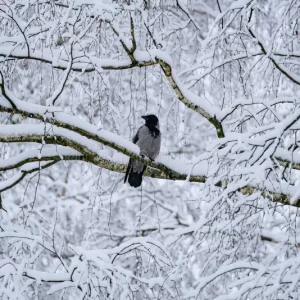
Dickinson’s subject belongs to a rich cultural tradition. Larks are everywhere in literature, art, and music: in Shakespeare, Shelley, Wordsworth, John Clare, Gerard Manley Hopkins, George Meredith, and Willa Cather; in Jules Breton’s painting The Song of the Lark; and in musical works by Schubert, Tchaikovsky, and Ralph Vaughan Williams, composer of the lovely and haunting The Lark Ascending.
The lark signifies song, dawn, ecstasy, joy, poetic inspiration, resurrection, spiritual ascent, and an enchanting music whose source may or may not be visible. It sings while flying upward and continues singing high overhead. We might no longer be able to see it even as its music trills and resonates. The lark becomes a voice without a body, as though, magically and mysteriously, it has risen to heaven.
I wonder how Dickinson would respond to my close reading of her poem. I suspect she’d be resistant, that she’d reply: “Look at the words, listen to the music. That’s all — no more.”
Is she saying, then, that the cost of close reading is too high—that it takes away the enjoyment of literature, that it’s at odds with the pleasure that a poem provides and has a fatal effect on the aura of the art on the page?
I feel the cogency of this objection, but I don’t agree with it. To me, close reading isn’t an anatomy or autopsy: it’s an act of attention. It’s literary, not scientific. It’s seeking to know intimately what we love. That’s a process and journey that never ends.
Something in a literary work always remains — something heard and absorbed but not possessed, understood but not used up. When an explication is finished, the poem remains persistently and wonderfully there. I’ve closely read “Split the Lark—” many times, and I’ve realized from this ongoing experience that it contains more than I’ll ever be able to say. I couldn’t kill it even if I wanted to.
William E. Cain is Mary Jewett Gaiser Professor of English at Wellesley College, where he enjoys teaching courses on Ralph Waldo Emerson, Henry David Thoreau, and other American writers. His recent publications include essays on Edith Wharton and Ernest Hemingway.
Close Reading is now available on Substack, where you can sign up to receive all posts directly to your inbox. To learn more, click here.