On The Sublime

Probably it should be said that On the Sublime was written anonymously since the very point that the person who wrote On the Sublime makes in the treatise On the Sublime is that authorship, in a sense, transcends authorship. Authorship is weird, the text says, and texts are weird.
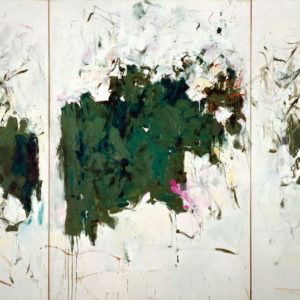
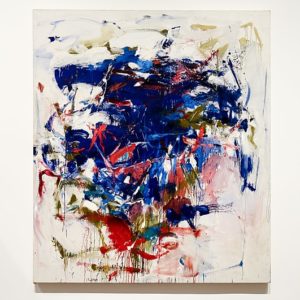
Girolata Triptych

I don’t know if you can call it a religious painting. Probably you can’t. That’s to say, there is no explicit religious intent in the painting as far as I’m aware, and certainly no one looking at the painting is going to suddenly pick out Moses or anything. It is a painting of a few blobs of black and green and a few other colors that sort of zingle through the canvas here and there.

Being Something and Being Nothing at All

Sometimes I think that the late Romantics are the most Romantic of all, since to be a Romantic is to commit to a lost cause. And it was already a lost cause to be an early Romantic of the 18th/early 19th century. But to be a Romantic in the late 19th/early 20th century was to be doubly doomed. It was to begin in anachronism and end in total dissolution.

Assist One Another

The reference is, of course, to Auden’s famous poem September 1, 1939. That poem contains the well-known line “we must love one another or die.” I say a well-known line, but that doesn’t really capture it now, does it? The line is more than well-known—it verges into the realm of sacred writings of our time, a scrap of prophecy left to us from the 20th century.

Modernity and Masturbation

You could say that Modernity has a masturbation problem. Not that masturbation itself is a problem. There’s nothing wrong with masturbation as a physical practice. The problem arises when masturbation becomes a metaphysics, the only means by which the self can relate to itself, as it were.]